Showing posts with label art activities. Show all posts

Tuesday, March 25, 2014

Spring Sprang Sprung

It's snowing as I type this, but spring did arrive last week. In a rare turn of events, it was also sunny that day. If you are reading this from pretty much anywhere in the South, you know how wacky our weather has been.

On February 25th, I was getting a hankering to see something besides all of this gray...it's in my hair, it's the color of my cat, it's in the sky, it's the carpet and walls of our classroom. Enough already.

Having not yet figured out my get rich quick scheme, my thoughts quickly turned to paint chips, yellow and orange ones. As my 2A class was enjoying their independent reading time, I got an idea. 

What if we write out the lyrics to "Here Comes the Sun" on paint chips and hang them somewhere in time for spring's arrival? I researched the lyrics to make sure that George Harrison was the only songwriter to credit. Guess what? February 25th was Mr. H's birthday. Well, that settled it. No turning back now.

When the kids were done with their 20 minutes of reading, I said, "I have this idea, and I think we should go through with it."

"Okay," said one male voice. The others listened enthusiastically...I think. I explained the whole alignment of the universe with the March 25 coinkydink, and they were on board. I split the song into lines. They wrote the lyrics on the paint chips. Our dear Mrs. Lassiter, also a George fan, laminated them for us. We punched holes and waited for the day.


Someone who looks a lot like me misremembered the solstice kick-off, but the display was up on the school's wheelchair ramp for the first full day of spring as the students arrived for another day of state testing. Ten bucks at Dollar Tree also got me a fistful of pinwheels, Elton John sunglasses for our tiny potted tree and three smiley face balloons. I know for a fact that at least two kids appreciated the effort, so it was all worth it.

We have packed up our paint chips and are ready to mail them to any location in the continental United States. You will need ribbon or yarn and a place to display them. We'd love to send them to you. 

Just ask. 


After all, who doesn't love this gem of a tune?


Friday, December 20, 2013

Holiday!

It's the last 45 minutes of the last class before holiday break!   
May I recommend some colored pencils and mandalas?

That is all.


Thursday, December 19, 2013

Capers, Part 1

You may remember when  I saw how to make a simple superhero cape on Pinterest last year.   All it takes is an old t-shirt and a pair of fabric scissors.   You can fancy it up, but that's optional.

SCA never took me up on a spirit day for cape wearers, so I forgot about it for a while.   This year I floated the idea by one of my classrooms full of dreamers and musicians.   Yes.   They were in agreement that we must create a reason to make and wear these capes.


Before I go any further, this has nothing to do with 
my curriculum or state testing.   Nothing.   
And it's not for a grade.

A finished no-sew cape. Black T & tape by LG.


We finally came up with the idea those who want to participate would make capes at home and bring in a photograph of us doing something awesome IN OUR CAPES!  

Things That Are Awesome:

taking out the trash
reading to someone else
reading to our pets
riding our bicycles
washing the dishes
playing our instruments
marching in an impromptu parade
singing into a hairbrush
brushing our teeth
brushing our pets' teeth
raking the leaves
baking cookies
vacuuming the house
hugging our grandparents
hanging around on the monkey bars
DANCING!
etc.

At the start of school, there were two Nerdfighters amongst us.   One of them was me.   Now that the John Green fan club is growing, we try to remind each other to be awesome.   For each AWESOME photograph that a student brings in, he/she will be rewarded with a priceless green DFTBA pencil.

Never fear.   No one is allowed to jump tall buildings....without a helmet!


Saturday, February 23, 2013

Graffiti Talk

So...this is similar to chalk talk, but students get to write on their desktops.   It's time to get out your bucket of dry erase markers in a variety of colors.   Hopefully, you've been blessed with student desks that have light colored workspaces.   If the markers aren't visible, it's a no-go.

First, students will need to read text that will allow them to think for a bit.

Then, you will hand out markers.

Ask students to think of a comment, a question, an image and a connection that reflects their interaction with the selection.

Students will write these on their desks.

Next, students will travel around the room with their markers to read others' responses.   They should comment on at least two other desktops.   They can answer the question or add to the illustration.   They can add their own comments or questions.


I tried this out with "The Evil Eye" from Jamestown Publisher's Wild Side:Beyond Belief series.  
Here's how the discussion went in one of my advanced language arts classes:

Some cultures use charms to protect people from the evil eye.

One student has a family member with such a charm.

Black and white marbles, lemons, garlic, spit...all protection from the evil eye.

Students were fascinated with the fact that spit was used to protect a baby from the evil eye, if someone remarked on the baby's beauty without following the compliment with a criticism.

If you do not have a hoard of dry erase markers, make a mental note to watch for the August Back to School sales at Rite Aid and Walgreens.   Often the Sunday newspaper inserts will have coupons for additional savings.   Walgreens usually adds an additional teacher discount in August.

Thursday, October 25, 2012

Squared

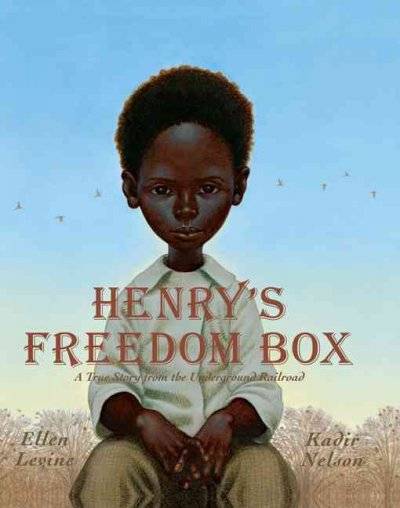
Yesterday in inquiry block, we read the amazing true story of Henry "Box" Brown's journey to freedom.   He was a slave who worked with tobacco in Richmond.   Once his family was sold and sent to another state, Brown decided to make a wooden box and ship himself to Philly with the help of two friends.   That's the short version.


Read this book to find out the details.   

It's illustrated by Kadir Nelson
I first fell for Nelson's warm style when I bought a copy of Ellington is not a Street because the cover had a beautiful girl in braids holding a 78.   It's like everything he paints is smooched by the sunlight.
See?


But let me tell you about the craft we did today.   Thanks to Pinterest, I decided to bring in paint chips and have my students make small boxes.   One chip for the lid, one for the box.   Easy enough, right?   And free!

Well, the first set of directions I found were not in English, and the computer translator was no help.
I found another set of directions that seemed straightforward and headed to Lowes for more chips.

Yeah.   I was so prepared by the time IB rolled around, so prepared that I should have known better.   My paint chips were smaller than the pattern suggested, and we weren't too skilled at immediately reducing the box to lid ratio.  

Who among us can do such precise math in the 15 minutes before lunch anyway?   

I showed the kids the main idea behind creating the box...where to cut vs. where to fold and then we estimated the size of our matching lids.   Some of us did pretty well.   And others of us, ahem, had lopsided marshmallow looking creations.   In spite of it all, many of the kids gave it their best shots.  

We ended up with enough oddly shaped containers to have a wedding shower for Barbie -n- Ken and offer them endless colors and sizes in casserole dishes, litter boxes and trash cans.  

And that's all I have to say about that.


Friday, October 12, 2012

Learn to Fly

Earlier, I told you about how much I was enjoying the children that I see in my daily Inquiry Block.   It's still true.   I witnessed another magical moment yesterday after lunch as everyone read silently until I made them stop and go to the next class.

Okay...every kid but one, but I'll get him going eventually.

This week we've read the ghost story, "The Woman in the Snow," retold by Patricia McKissack.   It's a tale that combines the history of public transportation in Alabama with a little bit of the spirit world. You can find this short story in The Dark-Thirty: Southern Tales of the Supernatural.

Grady, our antagonist, refers to the black domestics that line his bus route as "blackbirds."   Most of us have a lovely image in our heads when we read the word "blackbirds," so it's a good reminder that words can have both positive and negative connotations based on the attitude of the user.  And, yes, connotations are in the curriculum framework for the 8th grade Virginia Standards of Learning.

We're also listening to the following song.   I bet you knew that this was coming.   It's Paul McCartney's tiny, elegant song, "Blackbird."   This time the tone is one of hope and compassion.

I copied the lyrics for the kids.   Next week, we're going to fold the lyrics up and tuck them inside a plastic egg to make a Beatle Bomb.   Are you as concerned as I am about unleashing 25 teens with plastic eggs to toss into THE REAL WORLD?   Hold your breath.

On the other hand, wouldn't it be awesome to spy a lonely plastic egg, open it and find Sir Paul's lovely words?   It's worth the risk.   I think.


Our next art activity was based on a Christmas ornament from The Art-Full Tree.   Knowing one of the authors makes me feel really important, so let me tell you that I know Ms. Jan Gilliam, and this book is one of a kind.   

There are several ornaments that you may choose to make, but we are made the dove.   We are using black card stock to keep in line with our idea of beautiful blackbirds.   I admire the dove that was given to me all year long, so it is not solely for the purpose of hanging on a Christmas tree.   Teens love to decorate their bedrooms, and a few of the boys had already planned where to place their creations.

Card stock, push pins, scissors, clear thread, a light crayon/colored pencil and some cardboard are the only other materials you'll need.   There's a template for you to photocopy in the back of the book.

The finished products looked better than I predicted.   I have to admit that when it came time for the detailed push pin work, I wasn't sure if they'd have the needed patience.   They did.


While I have you here, I also wanted to show off two of the small collages a student made earlier.
If you remember, the subject of the artwork was, "If I had wings..."

Kat's going to fly to concerts all around the world. Check out her bloody handprint wings.   Creative idea.
Those handprints came from a magazine; I promise.

Caroline's going to sprinkle our world with food for hungry animals.
Special thanks to my dear friends and art people:
Rachel Oney for gifting us with card stock and clear thread
Aimee Layton for those deliciously new white Crayola Crayons
Sandy Phillips and Donna Lassiter for regular contributions to my Magazine Mountain.

Saturday, September 29, 2012

Can you picture that?

It's no secret that I love picture books and subject my 8th graders to them on occasion.   The truth is they aren't just for little ones anymore.   Sometimes a book's humor, topic, plot twists and word choice are really meant for an older audience.

This week I read a book to one of my classes in which the narrator, illustration style and word choice are geared towards a younger audience, but the subject matter is not.   It grates on your sensibilities like plaid pants with argyle socks.   We examined the book critically...as in...who is this book for?

Let me back up for a second.

I've been feeling overworked this year.   But haven't we all?   The days that I don't have a planning period are particularly taxing.   In addition to teaching 5 classes of language arts, I have another class that bookends lunch.   We had a bit of freedom in choosing a course of study for our kids, so I chose picture books, African American themed picture books.   Our minority population is small, but our students take civics this year.   I remember being captivated by the stories of the civil rights movement at their age.   Even so, I was dreading adding one more class and 19 kids I didn't teach to my plate.   Oddly enough, it's becoming a favorite part of my day.   Before lunch, we work on something of my choosing.   After lunch, they may read their own books, or borrow something from our classroom.

So far we've read Tar Beach and The People Could Fly and talked a little about the myth of flight in African American stories.   We listened to the Blind Boys of Alabama and the Hot 8 Brass Band perform "I'll Fly Away."

Although the song was written by a white man who was no stranger to picking cotton, it's a tune that's been embraced by black congregations as well.   (And doggone if the season premiere of Treme didn't launch right into that song last week.   Serendipity.)   We spent a few days making small collages entitled, "If I had wings..."   And I'm thinking of a way for us to dance the second line with umbrellas (and fairy wings?) around the parking lot.

But I digress.

Back to the story at hand.   I don't mean any disrespect, but Bessie Smith and the Night Riders will make your willing suspension of disbelief wear a little thin.   It's a children's book based on the evening that the KKK showed up at a Bessie Smith tent show and Ms. Smith told them where to go.

Yes, the KKK.   Hmmmm.

The author has a young girl sneaking to see the show, spying the Night Riders pulling up tent stakes and alerting Ms. Smith.   Sure, there's a happy ending, as there was during the real incident, but the KKK in a children's book is a little odd.   If you take a longer look at the cover, you will see those nasty Klansman with their torches framing the smiling Emmarene and Bessie.   Well, the kid does like the song "Tain't Nobody's Business," so she can't be a stranger to violence.   No word on if she knows the songs "Kitchen Man" and "Gimme a Pigfoot and a Bottle of Beer."

Of course, the 8th graders were spellbound by the truth behind the story and well aware of the multitude of unhappy endings that could have resulted in Ms. Smith's confrontation with the Night Riders.   They decided that the book should be read to children only after the subject of the KKK has been taught in school.   Otherwise, how would one explain the KKK to preschoolers, the usual picture book crowd?

For additional drama, the story of Ms. Smith's death is another real life nail-biter.   If you're ever in Clarksdale, Mississippi, make sure to take note of the Blues Marker at the Riverside Hotel.   It was once a hospital, the one where Bessie died.   You may read the text of the marker here.

I'm going to post a link to a clip from an A& E Biography on dear Bessie, but let me apologize in advance for someone's manners.   Someone couldn't miss the opportunity to call Ma Rainey "the ugliest woman in show business" before remarking on Bessie's beauty.   Not necessary to put one woman down to lift another woman up, and tain't nobody's business if she is.


Well, that's all for my not-quite-midnight-ramble.   Thank you and good night!


Saturday, June 30, 2012

Pick it up, pick it up, pick it up

Robots or rhumba?   What are you in the mood for?
Play a song to let your students know that it's time to clean the room.
I can't wait to try this and see if I have any 8th graders who are brave enough to dance in the classroom.


Wednesday, May 30, 2012

Random Acts of Inspiration/In the Beginning...

It's the last week of school, so I'm trying to be reasonable about what I ask kids to do in class and what I'm willing to grade.   Last Friday, we reminded ourselves of Where the Wild Things Are before sketching ourselves as Wild Things, cutting out our mini-portraits and gluing them in a group to form a massive Rumpus.   We also wrote vignettes about our earlier Wild Thing selves.

It's my opinion that opportunities for art and kindness should be integrated into the curriculum whenever possible.   I never feel like I do enough of the latter, so I wanted to think of something small and cheap that could turn into something big and priceless.   And, yes, it would involve paint chips.

To replicate this activity you will need one paint chip per child, a single hole punch, ball point pens, yarn, scissors and patience.   To add a little drama, you will need some super awesome Facebook friends, a camera, stamps and envelopes.


Here come the baby steps.   Have kids get out a spare piece of paper for a rough draft.   They should imagine opening a fortune cookie and reading an uplifting message that makes them have a positive outlook on their lives.   What would that one sentence say?   Come up with four rough ideas.   Star one.   Craft it into perfection.

Once they think they've got it going on, they should show it to you for approval.   You may need to help and redirect them at this point.   Mark their sentence with a highlighter when it's a final draft.

When they get the official okay from you, they should pick out a paint chip, punch a hole, tie a piece of yarn and write their message.

Option A:   Allow students to take their own messages and hang them somewhere out in the world for someone else to find.

Option Awesomer:   After school, create a Facebook event.   Invite your friends.   People who choose to "attend" can send you their snail mail address and receive a paint chip in the mail.   They must agree to hang the inspirational message, post a photo on the event page with a brief message of the where and why to their location choice.   The next day, have kids write the return address on the envelope as well as a thank you message on the back of the envelope.   Kids then select a pre-approved tag and attach a sticky note, "This chip was handpicked for you by (student's first name)'".   Unsealed envelopes should be placed in a box.   After looking inside the envelopes to make sure that all is well, have a "responsible" student seal the envelopes and another one put the stamps in the corner.   Send yet another child to the school's mailbox.   Include them in as many ways as you can; they should feel like they are in control of something good.

Students know what I'm planning to do with their work, and they know that any extra chips will be delivered on my road trip to the Delta.   (And, no, they are absolutely not my Facebook friends until they graduate high school, friend me first and I know at least one of their parents.)

Here's what my friends and my students have in common.   They're all willing to give a potentially good idea a chance.   I never confuse the two groups, but I sure do appreciate their shared sense of daring.

Keep your eyes peeled.   My buddies have all summer long to get the job done.   Wanna play along?   The next time you are in Lowes, grab a stack of paint chips and commence with some guerrilla inspiration.

Tuesday, May 29, 2012

Deck the Room with Paint Chip Garlands

You know how much I love paint chips.   They are beautiful, inspiring, plentiful and free.   I've already told you about Paint Chip Poetry.   Let's make something festive for the classroom.   How about some mini all-about-me collages to string into garlands?

Swing by Lowes for the Valspar paint chips that come with three colors and three squares cut from the bottom edge.   Haul out your Magazine Mountain.   Get the scissors, glue and twine or ribbon.

Here's the tricky part.   Students will need to keep their chips color side up but with the three holes along the top of their collage.   This is where the twine will go to string the art.   Someone in each class will probably assemble his upside down.   It happens.

My preference is for the collage to contain words and images and not extend up to the top third of the chip.   I like to see a little bit of the colors they chose. and I need room to thread the collages.   Also, no ratty edges from magazine pictures extending over the side of the chip, please.   Names can go on the back, since it's easy to flip the chip and see what's what.

This is a great beginning or end of year activity.   It's also a relaxing respite from a week of state testing.   Teens need the opportunity to express themselves...and see themselves in their learning spaces.


Thursday, May 3, 2012

Story Starter Notecards

If I knew how to rotate this picture, I would.  


Here's a simple way to build up your reserves of ready-to-go writing activities.   You will need glue sticks, scissors and your magazine mountain. Each child will also need one 3 x 5 note card.  

Students should choose 10 items to paste on their note cards.   The selections should be familiar objects, nothing too obscure.   Please encourage them to consider placing their items together in a visually appealing manner; backgrounds are nice.   On the lined side of the card, they should list their choices just in case they are difficult to discern.   They should also put their initials in the corner.   This will allow you to give them a smallish grade for assembly.

Review all submissions and choose some of the best offerings to use the next day...and keep them for next year's students.  

For a creative writing exercise, students randomly select another child's card.   The challenge is to tell a story using at least 5 of the 10 objects depicted.   For added difficulty, they may try to include more.   I also require a lead that is either action or dialogue to set the wheels of the plot in motion right away.   Don't let the creative nature of this prompt get bogged down with too much straight narrative backstory.   Yeah.   None of this bland, "Hi!   My name is..." prose either.  

Students love responding to art created by their peers, and because it's a simple assembly of magazine pictures, everyone's open to sharing his/her work.   Of course, if a child ever wants to keep art or writing between the two of you, you should honor that wish...unless it's something that makes you think the kid's in danger.   In that case, contact guidance for, well, guidance.

Saturday, January 21, 2012

Blackout Poetry

If you have a newspaper and a black marker, you have some poems on your hands.   Just ask writer/artist Austin Kleon.   

Choose a spot in the newspaper, decide which words are getting in the way of your emerging poem and mark right through them with your black Sharpie.   Left behind are the lines of your new creation.   Magic!

In order to simplify this exercise for 8th graders, I added a couple of steps.   Students used pencils first to identify words to cover with their markers.   Also, I asked that they glue their chosen text into their journals before using the marker.   This was an effort to keep ink from bleeding onto the desktops.   Make sure they use gluesticks in their journals, not liquid, as the paper is delicate.

Some kids will also eliminate words until a news article is basically summarized.   The idea is for a transformation to take place.   You will want to show them samples to help writers' imaginations run free.   These creations could also make beautiful art for your classroom walls...

It looks like censorship, but it's a lot closer to upcycling. 

Monday, January 2, 2012

Feel Good Art


This is sideways because I can't figure out how to rotate the image in my Blog.
The photo is saved right side up!
 As a prelude to this art project, you will need to teach the difference between denotation and connotation.   It's also wise to have students scour a piece of writing for positive and negative connotations.    This is a good opportunity to split your white board into two areas and allow students to write their found words down on the positive or negative side before leading a whole class discussion.   There are some words that may fit on either side, depending on personal opionion.  

For independent practice, you can have your students focus on the positive.   Here's another way to use your mountain of magazines.   Hand out blank 3 x 5 notecards, glue sticks and scissors.   Students will cut out words from their magazines that they feel have personal positive connotations.   The goal is to completely cover one side of the notecard without any bits stretching over the borders.  

When your grade their work, set aside the best examples and mark them with a symbol on the other side of the notecard.   These are pieces that you would like donated back to you for classroom art.   (No pressure.)   Arrange the returned notecards to your satisfaction.   Glue them to another piece of paper that can be laminated.   Hang the community creation in a place where students are able to get close enough to view their work. 

Tuesday, August 30, 2011

Magazine Mountain

If you put the word out, most folks are happy to route their used magazines to you for classroom use.   There's really no end to what you can do with them.  

Lean in close for a secret.   No matter what you are using the magazines for, children will find themselves reading the text now and then.   You're encouraging them to browse and scan text, and those are great skills for them to have in their tool bags.   Shhhhh.  

Freshen up your propaganda lessons.

Make cut and paste poetry kits.   As in cut and paste...literally.

Have students create collages.   (conflict, theme, character)

Let thought-provoking images become visual story starters.

Line your desk drawers with beautiful pictures.

Teach students how to make fun envelopes from scratch to jazz up a friendly letter lesson.

Add a visual component to a traditional book report.

Piece together pictures from several pages in a quilted fashion to make wrapping paper.   How about wrapping up a new book with a personalized bookplate to pay tribute to your amazing library staff?

Cut out perfect squares for origami paper.

Think about a lesson you already teach.   How could a magazine add to your lesson plan?  

For example, when I cover "Barbie-Q," by Sandra Cisneros, I have the class assemble dolls that they think should be marketed to children.   They also include accessories.   Students are encouraged to piece together their doll.   They may choose a soccer ball from one page, a head from another, a body from another, and so on.   Students are encouraged to be as creative as possible.   They also write a commercial script for their target audience.

I always preface magazine lessons with an explanation of what we should and should not expect of our custodial staff.   Since it can get a little messy, it's good to remind artists that custodians should not have to clean up every little scrap that we create.   Allowing the last 10 minutes of class for clean-up will usually be sufficient.   And, yes, even though you quickly flip through magazines to rip out age-inappropriate material in the mildest of women's magazines, you will miss something.   Address the issue and move forward.   You know your students best.

Sunday, July 17, 2011

My Favorite Staff Development

For a while, our school system let teachers pick from a tantalizing menu of staff development opportunities before Labor Day arrived.   Some of the classes were taught by people "on the outside," but my favorite training session was taught by my dear friend and the former art teacher for my school, Mrs. Rachel Oney.

What did we do?   We painted furniture.   Why did I love it?   The process of painting furniture is a stress reliever for me.   It may not be the same for you.   I also have eyes that get hungry for color, so it's good to add something fresh to the classroom now and then.   Learning a new process puts us back in the position of student, and it's always good for teachers to take on that role.   We need to be in touch with what it feels like to take a risk and expand our knowledge.  

The class attracted most of the county's art teachers and me.   We were encouraged to bring a piece of furniture to paint for our classroom.   I chose one of those chunky, old wooden desks-- the kind that's mainly tabletop.   I brought a copy of the book John Lennon's Real Love: The Drawings for Sean.
http://amzn.com/1608870421.   I wanted to mimic Lennon's style and incorporate his self-portrait doodle and a favorite line from his song "Mind Games."   Not being an artist, it was a challenge to reproduce watercolors with acrylics, but I ended up with something I liked.

If you have been following my Blog, you may remember that I mentioned that something from my classroom was retrieved for me by my thoughtful principal.   It was this desk, the one I keep at the front of the room.  

When I heard the news that my school was hit by the tornado, I was at peace immediately with losing everything in my classroom.   I just felt so fortunate that no one was in the building.   Really, what more could you hope for?   Even so, it was this desk that I thought of first.   I was going to miss it.   As an artist friend of mine says, "There's more where that came from."   My mind was already swirling with new ideas.


Figure out a thrift store circuit and hop in a pickup truck.   It's a great way to score affordable wooden bookcases for your home and classroom.  


Also, look for sweet little wooden chairs, tables and rockers  that you can revive for your youngest friends.   Choose a dry day for your project.   Remember, it's always worth prepping and priming before you paint.   Have fun!


Thursday, June 23, 2011

Holly George-Warren & Laura Levine: A little bit country and a little bit rock and roll

Shake, Rattle and Roll: The Founders of Rock & Roll  
http://amzn.com/0618432299

Honky-Tonk Heroes and Hillbilly Angels:
The Pioneers of Country & Western Music
http://amzn.com/B001NXDTC4

These books are short and sweet, so I'll keep this brief.   Both have one page biographies of important rock and country performers.   Ms. Levine has created a fun, folk art likeness of each entertainer.   You can use these titles for read alouds and YouTube time.  

I like to present two performers at a time and show one song from each artist.   For example, the pianos of Fats Domino and Jerry Lee Lewis pair up nicely.   Buddy Holly and Ritchie Valens have become linked through tragedy.   Love matched Johnny Cash and the Carter Family.   George-Warren already yoked George and Tammy for you.  

If you don't want to read the whole book, it can supplement a study of The Outsiders since both Elvis and Hank Williams are featured in these books.   It's also a good reminder of writing for an audience.   Watching a live performance makes the sometimes abstract idea of audience literal for students.

Hey, Bo Diddley!   If you are an art teacher, how about making diddley bows with the kids?   Here's a link so you can watch Jack White make one in the opening scene of It Might Get Loud.   He goes electric with his, but I'd recommend acoustic for the classroom.   http://www.youtube.com/watch?v=dZNk76_4lds

Right now both books are inexpensive enough on Amazon to buy a spare set to deconstruct and use as classroom art.

Thank you to my dear art teacher friend and fellow music fan, Robert Mercer, for donating new copies of these books to my classroom!

Sunday, June 19, 2011

Paint Chip Poetry

I have to confess that I have always loved standing in the middle of those paint chip displays at hardware stores.   It's like being inside a no-maintenance flower garden.   And Lowe's sometimes opens at 6 A.M. on weekdays.   Let's say you wake up after a rough night without a lesson plan.   Swing by Lowe's.   I've got you covered.

Some of the chips come in a single color, some have several variations of a similar hue.   Take the number of students you teach and offer twice the number of paint chips for their selection.   They are free.   Just be polite about it.

To tell you the truth, my paint chips are still in the console of my truck because I kept forgetting to bring them inside to use.   I have a plan for the coming year though.   Simply writing while being inspired by a color may be a little too unstructured for eighth graders, so I think I'll make a pattern for poets to follow for those who choose to use it.

I should probably tell you now that I am not a huge fan of rhyming poetry generated by 8th graders.   Every now and then my best writers will surprise me with something artfully crafted, but most often finding a rhyme blows the whole point of careful word choice.   A desperate rhyme jolts the reader out of the poem.

Colors evoke memories.   This is a good activity in teaching tone, specifically nostalgic tone, and sensory imagery.   Pick one paint chip that reminds you of a person, place or object from your childhood.   (For writing purposes, I consider an 8th grader's childhood to be 5th grade or earlier.)  

Arrange the chips in groups of blues, greens, yellows, oranges, etc. and allow the writers to choose their own colors.   Students usually choose happy memories, so their tone easily translates into nostalgia.   If some children want to write about a negative memory, give him that opportunity.   It's a great moment when those memories are ready to have a voice.

Here's a general idea for the structure of the poem, but please modify it to make it work for you.   I also included a rough sample of something that I could have written as an eighth grader.   When I model writing for students, I try to choose from the topics that I would have had on-hand at their age.

[Paint color's name] is the color of __________________
I remember __________________
and how it felt to__________________
I can still hear__________________
I can still see __________________
I miss__________________
[Paint color's name] is the color of __________________

Summer Sigh is the color of July
I remember mint chocolate chip birthday cake
and how it felt to be able to invite everyone I knew
I can still hear my mom wondering aloud if we had left anyone out
I can still see my dad showing off the severed thumb trick...again
I miss my grandparents gathered around the picnic table waiting for my wish
Summer Sigh is the color of days melting away

With your writers' permission, it would be fun to post the colors and poems around the room for their classmates to enjoy. 

I've also seen paint chips turned into simple bookmarks.   Just punch a hole and add some ribbon.   Thread a bead, but only if you are feeling fancy.

Saturday, June 18, 2011

The Mysteries of Harris Burdick

You already know Chris Van Allsburg's art and prose from Jumanji, Zathura, The Polar Express and several other gorgeous children's books.   His illustrations are full of wonder and possibility.   The Mysteries of Harris Burdick was published in 1984, but I had not seen it until my pal, Willie Thornton, recommended that I hunt it down a couple years back.   Better yet, check out an entire site based on the book .
In this book, each of Allsburg's exquisite one page black and white illustrations is titled and paired with one simple line.   For example, in the picture "Under the Rug" a man holds a dining room chair over his head poised to smash a lump beneath his living room carpet.   The caption is, "Two weeks passed and it happened again."


Now, there is a portfolio version of the book available.   You get the captioned artwork on large sheets to hang in your classroom.   Yes!

Make the book fit your students' needs, but let me tell you how I use it.   I read the whole book aloud to the class, but I choose six of the pictures that I think kids have a good chance at tackling.   I number the pictures.   A student comes up and rolls the die to see which prompt the class will receive.   It's a nice touch to add more mystery to this assignment in keeping with the mood of the book.   Students may use the caption to either start or end their tale.

Selfishly, for this activity I relish reading 25 interpretations of the same piece of art.   Generously, I allow students to write a second story on the picture of their choice.

The Chronicles of Harris Burdick: Fourteen Amazing Authors Tell the Tales comes out right before Halloween.   Oooooooooo.    Scary.   I mean it.   Please, don't show this book to your precious writers until after they've written their stories.   There's nothing worse than an expert intruding on your creative head space and tap dancing all over your vulnerabilities while you are trying to call up your own magic.

If you are an art teacher, it could be fun to work this activity backwards with your students.   Keep the book hidden, give students the titles and captions and see what they create before revealing Van Allsburg's interpretation.

Thank you to Christopher Newport University's Teacher Preparation Program for donating a copy of the portfolio edition to my new classroom!

Saturday, June 11, 2011

Do you really need to ask for the wild rumpus to start?


Where the Wild Things Are is as full of as much magic as you remember.   Maurice Sendak's illustrations are marvellous.   What you may have missed during earlier reads is his genius use of white space.   This is something that was pointed out to me at the 2009 Eastern Virginia Writing Project by teacher Michelle Crotteau.   Notice how the white pages are taken over by color as Max goes deeper and deeper into his imagination.   That's symbolism-- which isn't always easy to teach to 8th graders.

An activity that Ms. Crotteau connected to this children's book involves using an adjective word list.   The word list included adjectives to describe appearance, color, disposition with both positive and negative connotations.   Students can choose words from the list to describe Max and the Wild Things.   It's something that I have students do individually first.  

Then, I ask them to consult with the other students in their row before adding a few of their adjectives to the white board.   The white board is clean with the exception of the words "Max" and "Wild Things."   Students love writing on the board, and it isn't long until the board is covered.   This is the wild rumpus part of the lesson.  

As a class, we question adjectives that don't seem to fit, and the student who suggested the word defends his/ her choice.   99% of the time the students have logical reasons for what may first seem like an ill-fitting descriptor.  

Here's an example of a personality word list that includes adjectives with both positive and negative connotations.  
Follow this link over to American Masters (PBS) for more information about Mr. Sendak.
Thank you to Christopher Newport University's Spring 2011 children's literature class for donating their copies of Wild Things to my new classroom!   Thanks also to Michelle Crotteau for bringing me more copies of her comprehensive adjective lists.

Tuesday, June 7, 2011

Hello, I'm Johnny Cash.


My favorite classroom art was completed by last year's geometry students.   I was "babysitting" them while most of the 8th grade was taking the course three SOL.   Our art teacher even let us borrow her classroom, so we felt like real, live artists.

First, I found a couple of photographs of Mr. Cash on line that I liked.   My real, live artist boyfriend made us the patterns you see below.   We then planned out which colors would go where.  


The patterns for the collage. These were traced on poster board and cut out.
I toted in magazines for the students.   At school, we cut out bits of black, light and dark browns, skin tone, silver and fingers!   Yes, fingers!   I was on a Romare Bearden kick since I saw his collage, "Three Folk Musicians," in a Scholastic Art magazine.   You can see it by following this link.   Be sure to zoom in on the fingers!
http://www.allposters.com/-sp/Three-Folk-Musicians-1967-Posters_i1813743_.htm

Designated student pasters worked on different pieces of the collage.   You can really see the beauty of the technique in the guitar below.   We pieced it all together on a piece of red poster board.

The finished collage before strings, frets, tuning pegs and lamination.


When it was dry, I used a silver Sharpie to draw the guitar strings.   I then cut strips from an old map of Arkansas and Tennessee to make the frets and tuning pegs.   I made sure to include Dyess, Hendersonville and Nashville.   Then, I hauled it to Office Max to be laminated.

Mr. Cash kept watch over the back left corner of my classroom behind my desk on the side of a file cabinet.   He took on some water in my classroom when the tornado raised the roof.   The seal of the lamination didn't protect him from mold.   When I heard that the storm hit my school, I couldn't help but think of his song "Five Feet High and Rising."


Just yesterday, a parent of one of my current students sent me word of an end-of-year gift for my new classroom.   She is also a sub, so she had seen my Johnny Cash art.  

Here's what's on its way to me right now:
Johnny Cash - An American Legend Music Poster Print, 22x34

What's not to love?

Note: You certainly don't have to be an artist to facilitate such activities in your classroom.   Leaf through some Scholastic Art magazines, see the lesson plans they've created and modify them to suit your curriculum, time constraints, needs and abilities.   You won't believe the beauty that emerges.