Wednesday, October 19, 2011

Fidgety

Are students in your class restless?   I have a few tips for you.  

If children like to tap on the desk, place an upside down mouse pad on their workspace.   This will absorb the sound and allow them to continue.   Another alternative is suggesting that they tap on the top of their thigh.  

If you are able, keep an empty space at the back of your classroom for children who need to simply stretch their legs.   Additionally, having a bookcase or cart in this location allows students to stand up and work for a bit.   I know this sounds like a recipe for disaster, but I've never had a child misuse this option.


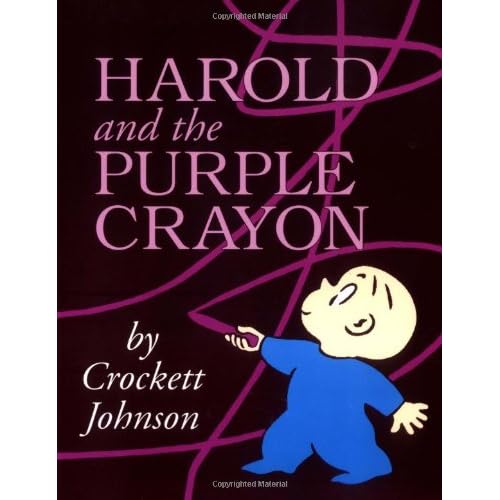
If you like to stretch, leading kids in a simple yoga move that I refer to as the "Harold and the Purple Crayon" is beneficial.   You clasp your hands together with your pointer fingers pointing and aim them at the ceiling.   Imagine that you are holding a purple crayon.   Draw circles on the ceiling while keeping your arms next to the sides of your head and swivel at the hips.   Namaste.

If you have a stress ball collection secreted in your desk, share these valuable tools with the fidgeters.

If you have a doodler, allow the art to continue as long as it's not a task-avoidance behavior.

According to neatoday's fall 2011 issue, a teacher and an ergonomic furniture company have collaborated on an adjustable-height desk.   Another teacher used old car tires to make do-it-yourself footrests.   And get this: one North Carolina elementary school has gathered used exercise bikes.   Now students get to "Read and Ride" for 15-minute intervals.  

You're creative!   What will you come up with next?

P.S. Today I learned a new trick from our chorus students.   We tried this in between some standardized testing.   It's a countdown coordination exercise.  

Shake your right hand while counting down 5-4-3-2-1.  
Repeat with your left hand, right foot and left foot.  
Then you count down from 4 and repeat the process.  
Then 3.  
Then 2.

Monday, September 26, 2011

Face the Front

It's library day...the best day of all.   Before school, drop by the shelves for some primping.   From each shelf , choose one book to "face the front."   Pull it from its snug little spot and place it on the empty right side of the same shelf with its cover facing out towards your readers.  

You'd be surprised how difficult the fine art of browsing can be for struggling readers.   Advanced readers love teacher recommendations too.   Everybody wins.

Just any old book?   NO!   Think about your first class of the day and what tantalizes them.   Choose those books first.   As your time in the library is drawing to a close, replace any vacated spots with books that you know have some appeal to the next set of kids you are bringing.   Also, if you have recently done read-alouds in class, include those in the featured books.

This may bother your librarian.   Talk it over first.   If done correctly, this process will make ushering 25+ readers through the stacks easier for both of you.   Keeping the books on their same shelves also gives you, any support staff, and the librarian reference points for sending students to the right bookcase.   For example, flipping Stargirl's bright blue cover around will indicate where the SPI section is as you help students quickly track down books.

Sunday, September 25, 2011

Readicide

Readicide: How Schools Are Killing Reading and What You Can Do About It

Kelly Gallagher is a full-time English teacher who writes about the crafts of teaching teens how to read and write.   He's a dynamic speaker.   If you see his name listed among the choices of presenters when you attend your next conference, he's worth your time.

I found a copy of Gallagher's Readicide: How Schools Are Killing Reading and What You Can Do About It in my principal's office last week.  It's a topic that I've heard him address in a hotel ballroom full of educators.   I've also read parts of his book online and seen him featured in a YouTube video.   Finally, I was able to read his book in its entirety.   You should too.

Gallagher elaborates on finding the sweet spot of reading instruction which lies somewhere between underteaching and overteaching books.   Our primary goal as reading teachers is to develop lifelong readers and critical thinkers.

The 50/50 approach is what works for Gallagher.   His students' reading is split evenly between recreational and academic.   He gives credit for the recreational reading, but he does not "chop it up" with worksheets and quizzes.   This type of reading is independent.   To develop academic readers, Gallagher puts in more supports for the reading.   He makes sure students use fix-up strategies when they become confused.   He creates a purpose for reading.   He activates prior knowledge.   These books may be too difficult for students to read them "recreationally."   Gallagher approaches classic literature by connecting the thinking that the book requires of them to the thinking that the real world needs from them.

You will benefit from his outline of the 50/50 approach, list of books that appeal to reluctant readers, explanation of what good readers and struggling readers do (don't do) while approaching a text...the list goes on and on.   Gallagher is a master teacher.   There are a couple of points that we do not quite agree on.

Gallagher does not have kind words for the Accelerated Reader program, a program I find helpful in aiding my students.   Yes, it can become a nightmare when teachers don't use it the right way.   Also, I think it was designed with a reward system in mind.   For example, when you reach a specific number of points, your teacher or school may reward you with a treat.   With the exception of end-of-year certificates, our school does not operate that way.   The students and I agree on a reading goal based on their independent reading level for their homework credit.   I provide silent reading time in class for them to reach their goals.   They take oven-book multiple choice tests on the book, so I can track what works and does not work for them.   The records are incredibly helpful to me as I can see their likes and dislikes and come up with book recommendations for them based on level, length, and/or topic.   I can also initiate conversations with them about books we've both read.   It's powerful for students to have lists of all of the books that they have read during our school year together.  

Additionally, in 8th grade I have not quite mastered the 50/50 model.   Most of my students, even the advanced ones, do not like reading more than one book at a time.   Many adults I know feel the same way.   In Gallagher's classroom, his students are reading one recreational and one academic book at all times.   This split focus frustrates my 8th graders, especially the ones who read slowly or have memory challenges.   I do occasionally have them use Probst's questions for interacting with texts, writing prompts or graphic organizers as they read.   Even so, I don't think that the amount/type of work I attach to their independent reading would qualify as the "chop up" approach that Gallagher rails against.   In eighth grade, students seem to enjoy telling me all about the book that they chose to read for themselves.   It's identity.

In spite of minor differences in the way that we approach reading instruction, I still believe that Gallagher is telling us the hard truth.   I do not oppose standardized testing in moderation, but some teachers, schools, school systems are losing sight of what it takes to create real readers.   Achieving a level of success on standardized tests and developing critical thinkers with a passion for reading are not mutually exclusive.

What can you do today?   Increase your students' and children's access to books, magazines, comic books, graphic novels...the printed word in general.   Providing a variety of reading material to students is the cornerstone of any effective, authentic reading program.   What changes can you make in your classroom to connect students with high interest reading materials in the weeks ahead?
Tuesday, September 20, 2011

Somebody Wants But So

One easy way to break down a fictional text is to use the "Somebody Wants But So" approach.   It's less complicated and time consuming than a plot diagram.  

Readers can reduce a story to a character's goals, the plot's complications and the problem's solution.   Even with a simple task, it's a good idea to model the approach using a children's book.  

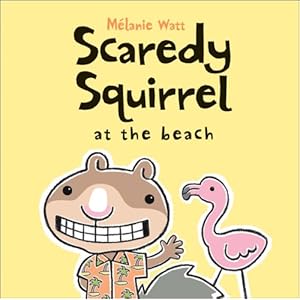
Scaredy Squirrel at the Beach

Scaredy Squirrel at the Beach works well.  

Spoiler Alert:

Scaredy Squirrel wants to create a private beach, but he'll need to visit a real beach and face his fears to get a seashell.   So he hatches a plan to address all of his worries (sea monsters, pirates, falling coconuts) and get a shell.   He even accidentally enjoys himself when his careful preparations go awry.  

Scaredy Squirrel likes to be in control of his environment and pre-plan for any potential worst case scenario.   Sound like anyone you know? Ahem.   That would be me.


[Which brings me to my next point.   When I was allowed back into the library after the tornado hit, I started hoarding a few books on behalf of my colleagues and our students.   Some of my all-time favorites went into bright orange tubs while the rest of the library was packed into cardboard boxes.   I wanted to know where Captain Underpants, Harold & George and Babymouse were at all times.   They went with me to "night school" last year, to my shed for the summer and to our new campus for the fall.]

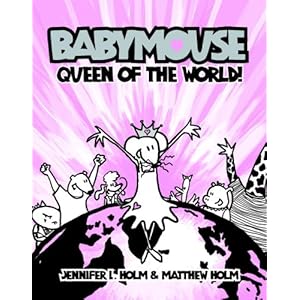
Babymouse #1: Queen of the World!

Since we've finished novel studies in class, I thought we'd relax with our heroes today.   Each child read one of the books and summarized the text using Somebody Wants But So.   For most 8th graders, the books can be finished in a blocked class.   If students read at a slower pace, the Babymouse series is shorter than the Underpants.  

To an 8th grader, children's books are non-threatening and provide a platform for teaching new concepts.   Graphic novels often contain humor and plots that speak to the teenage experience.   Babymouse's locker troubles, bad whisker days and mean girl encounters are familiar to 8th graders.   As for Harold and George-- well-- they ARE a little immature sometimes for 8th graders, but I can't help but love their shenanigans, and my students are kind enough to indulge me.

While the majority of our library is still in cardboard boxes, it was nice to look out across the classroom and see everyone relaxed and engaged in a book.   And that makes the Scaredy Squirrel inside me relax too.

Tuesday, August 30, 2011

Magazine Mountain

If you put the word out, most folks are happy to route their used magazines to you for classroom use.   There's really no end to what you can do with them.  

Lean in close for a secret.   No matter what you are using the magazines for, children will find themselves reading the text now and then.   You're encouraging them to browse and scan text, and those are great skills for them to have in their tool bags.   Shhhhh.  

Freshen up your propaganda lessons.

Make cut and paste poetry kits.   As in cut and paste...literally.

Have students create collages.   (conflict, theme, character)

Let thought-provoking images become visual story starters.

Line your desk drawers with beautiful pictures.

Teach students how to make fun envelopes from scratch to jazz up a friendly letter lesson.

Add a visual component to a traditional book report.

Piece together pictures from several pages in a quilted fashion to make wrapping paper.   How about wrapping up a new book with a personalized bookplate to pay tribute to your amazing library staff?

Cut out perfect squares for origami paper.

Think about a lesson you already teach.   How could a magazine add to your lesson plan?  

For example, when I cover "Barbie-Q," by Sandra Cisneros, I have the class assemble dolls that they think should be marketed to children.   They also include accessories.   Students are encouraged to piece together their doll.   They may choose a soccer ball from one page, a head from another, a body from another, and so on.   Students are encouraged to be as creative as possible.   They also write a commercial script for their target audience.

I always preface magazine lessons with an explanation of what we should and should not expect of our custodial staff.   Since it can get a little messy, it's good to remind artists that custodians should not have to clean up every little scrap that we create.   Allowing the last 10 minutes of class for clean-up will usually be sufficient.   And, yes, even though you quickly flip through magazines to rip out age-inappropriate material in the mildest of women's magazines, you will miss something.   Address the issue and move forward.   You know your students best.

Wednesday, August 24, 2011

My Summer Vacation

It's that time of year again!   Are you ready to go back to school?   We're not quite there yet.   I'll tell you about that later.

I thought I should let you in on what I did over the summer break.   The Virginia Department of Education hired me to serve on the Content Review Committee for the 8th grade reading SOL test.   They also paid me to work on the Range Finding Committee for the Virginia Substitute Evaluation Program.   Both groups were filled with dedicated educators with a single desire-- to ensure that we are assessing our children in fair and rigorous ways.  

Do you think that you would like to work for the DOE?   Check the state website every Friday afternoon for Superintendent's Memos.   This is a great information hub for the latest news in Virginia as it pertains to education.   It's not top secret; it's open to the public.
I also enjoyed being a teacher assistant for two weeks at William & Mary's Summer Enrichment Program for the Gifted.   Learning about engineering and chemistry was fun for this English major.   Did I mention that I was not responsible for lesson plans?   I may propose a unit to teach for the summer of 2012, but as for last summer, assisting was just right for me.   I had the good fortune of being paired with Mrs. Carolyn Kendall.   Her hands-on approach to some seriously sticky science was brave and inspiring.   It's always a bonus to see a master teacher at work.   Sure, the chances that I will ever teach chemistry are slim, especially if my high school chemistry teacher gets wind of the plot.   Great teaching is great teaching.   We can always learn lesson-design tips from our colleagues.

Not only is a passion for teaching contagious, so are summer colds.   And, boy, did I catch one.   It felt like the flu and clung to me like nothing I've ever experienced.   If you have stock in Kleenex, you're welcome.   That's all I need to say about that.

I also enjoyed taking on the role of guest teacher at William & Mary's 2011 Eastern Virginia Writing Project.   You didn't miss anything since my main focus was on resources and ideas I've already posted here.

Finally, my last week of freedom included some time with dear friends in the Outer Banks.   Ahhhhh.  

So, yes, I need to get back to work to take a vacation from my vacation.   I have a nice little corner trailer in our temporary modular units.   I have two windows and my own air conditioning unit with a thermostat.   I even have my own phone and extension.  

Although our office staff has worked tirelessly over the summer, they were unable to build over 400 student desks and such.   We are anticipating some NEW furniture by the end of this week.   To tide us over, we were able to scavenge through some items that were salvaged from our school.   I found a chair that students painted for me years ago.   I also eyed an old, old, old oak desk that I hope to get soon.   My pal Willie Thornton let me have one of his wooden bookshelves.   I picked up a few ancient wooden chairs, a wheeled metal cart and one of those cool book-holders librarians' use to exhibit dusty dictionaries in all of their glory.

So far this week has been a whole lot of time spent with cardboard boxes.   And then there was a whole lotta shakin'.   When that earthquake took hold of us yesterday, we were having our first faculty/staff meeting of the year in a teacher's classroom.   Yep, we were in a trailer up on cinder blocks.   It was one wonky ride!   Everyone's fine, but we're looking forward to Irene's departure a.s.a.p.

Sunday, August 7, 2011

All Children Can Learn

Here's a truth that we should carry with us wherever we go.   All children can learn.   It's true.   When we make the mistake of believing that a child cannot learn, for whatever reason, after spending September to June in our classroom, doesn't that say more about us than the child?   It's that simple.