Showing posts with label cultural literacy. Show all posts

Saturday, December 6, 2014

Zen and the Art of Shopping for Books at Ollie's

Zen and the Art of Buying Picture Books 
for Older Children and Teens for the School Library:

1. Familiarize yourself with respected authors and artists.

2. Think about all of the classes offered at your school 
and the curriculum needs.

3. Keep an eye out on the web and in trade journals 
for what's new in picture books.

4. Win the lottery.

5. Buy all the books.

Okay...Let's say you didn't do #4. Here's the more realistic version:

4. Sign up to be in Ollie's Army. You have to neither keep nor bear arms.

5. Wait for your coupon in the mail.

6. See which stores are near you.

7. Put on pants.

8. Bring your Smart Phone, if you have one. 
You can use this to access book reviews 
as well as your school's current collection.

9. Make good choices using your school's selection guidelines.

If you are like me, you are too cheap for a Smart Phone. So...

8. Scan the shelves to get a feel for the way Ollie's arranges its picture books.

9. Do a quick pass of all the shelves to pull the books you recognize 
from good reviews you've come across by chance. 
Pull all of the authors that you know as awesome while you are at it.

10. Make a pile in your shopping basket.

11. Make another pass and pull books that look intriguing. 
Examine each book before placing it in your basket.

Check the font for accessibility and the quality of the art as it supports the text.
Is the book one that would support the curriculum?

This is why you are wearing pants. You may need to sit on the floor 
in order to see the bottom shelf of books. Yep. 
You may want to bring a friend, 
if you will need help getting back up.

Sunya Osborn lists these look-fors in her article, 
  • Mature themes
  • More complex illustrations than those that would be easily appreciated or understood by younger readers
  • More text or difficult text than would be appropriate for the short attention spans of younger readers
  • Subtle meanings beyond the understanding of younger readers
  • Two levels of meaning - one for younger readers and one for older readers
  • Fiction or non-fiction
12. Evaluate the quality of the writing.

13. Imagine the readers who may check this book out of the library.

14. Place books in your cart that fit your selection criteria.

15. Look through your first pile of likely "sure bets." 
Return any "lemons" to the shelves.

16. Now, think about your budget, look at the prices and make final cuts 
before getting in the check-out line.

17. Give the cashier the coupon before purchasing. Save your receipt.

18. You may want to set some books aside before processing, 
if you are still uncertain of the content of some titles. 
It's easy to return items to Ollie's.

Why Ollies? Here's the sad truth about picture books. By the time you read a well-researched article about them, sometimes the titles are out of print! Sometimes the price of the picture books will eat away at your budget in big gulps. Are picture books worth every penny? Yes. But we are being realistic here. Shopping at Ollie's requires the same Zen approach as Magnetic Poetry. 
You have to just be open to what is there. 
Also, the Ollie's in my town often plays soul music over the store's sound system. 
This helps when I have to get on up...and get down.

Every now and then you will see a CRAZY deal on a book that you know is amazing. A few years ago, John's Secret Dreams was on Amazon for $3.99. I did what every sane person would do. I bought about 15 copies and hoarded them for a while before sharing them with friends. When I opened my order, three of the copies were signed by the author.

This is more of an exception than a rule.

If there are specific titles that you want to use in class, checking the online catalogs of local public libraries is a good way to try out a title before 
investing in hunting down a copy.

"Selling" the idea of picture books to middle and high school students and teachers may take a little effort, but it's worth it. There is so much to be gained from the richness of story that comes from the visual arts.


Thursday, September 5, 2013

The Novelty of Reading

There's something about the novelty of chance that's always appealing, so why not let it work for you?

Remember that Christmas ornament swap game?  It can get downright cutthroat, always a fun scenario around the holidays.

Here's how it goes:

Everyone brings a wrapped ornament and tosses it in a community pile.
Everyone draws a slip of paper with a number.
The person with the number "1" unwraps a gift, shows it off and sits down.
Person 2 may "steal" the ornament that's already unwrapped or pick from the pile.
Person 3 may nab either ornament or pick from the pile.
Any time someone's ornament is taken, the person returns to the pile for a new one.
And so on, and so on, and Scooby dooby doo-bee.

Here's how you can make this work for you:
Get a whole bunch of short high interest books of a similar size.  These could be read in 15ish minutes.
Stuff them in a bag/ box.
Let kids draw numbered slips of paper.
Same idea with the ornaments...but unless you want to wrap all of those books, just let the kids pick from the bag without looking.
The kids show off their book.
Subsequent players may steal or pick something from the bag.

EVERYBODY READS.   Will they complain?   Yeah.  But not for too long.  You've heard worse.

If your school uses the Accelerated Reader program, kids then take an open book test.   Then they want to read another book.

Children can switch titles with a friend or pick something new from the bag, once they are done with their first book.

The key is using high interest books with a visual element. Bigfoot, monster trucks, NASCAR, Disgusting Bugs, Area 51, Bermuda Triangle, ESP, sharks, urban legends, movie monsters, bats, hunting, extreme sports...you get the picture.

These books are usually expensive, but they are worth the investment.  A wide sampling of kids love them, and they are an easy way to build cultural literacy and general background knowledge.

Wednesday, October 26, 2011

Good Stuff Cheap

I'm talkin' 'bout Ollie.   If you have an Ollie's in your neck of the woods, count yourself lucky.   Their website sometimes shouts at you, but be brave see if you are within driving distance of a store.


I just accidentally spent two hours there.   What was first an Apple & Eve juice run, turned into a book buying extravaganza, and the soundtrack didn't help me exit.   Every last song that came over the speakers was a good time.   I finally had to head to the check-out during "Tutti-Frutti," but it's no reflection on the great Little Richard.

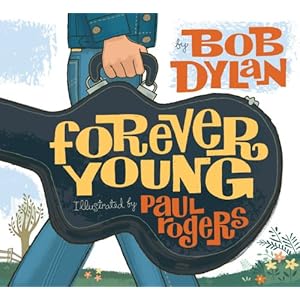
Most of Ollie's book collection is hit or miss, but the children's zone is always chock full of awesomeness.   Most days, I don't let myself browse, but I did today.   One of my favorite finds was an illustrated book containing Bob Dylan's lyrics to the song he wrote for his son Jacob, "Forever Young."   There was only one copy left.   Sorry about that!
.Forever Young


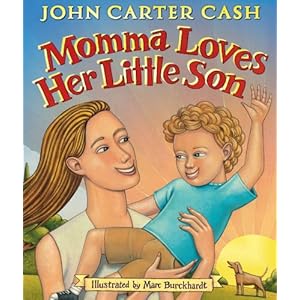
Momma Loves Her Little Son
John Carter Cash penned a tribute to his mom called Anchored In Love.  
He now has a children's book called Momma Loves Her Little Son.  
The illustrations are sweet and warm.


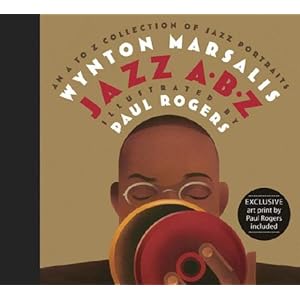
Jazz ABZ: An A to Z Collection of Jazz Portraits with Art Print
Jazz was there too.  
Paul Rogers sure knows how to turn music into visual art.


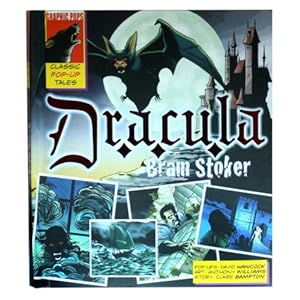
Dracula: A Classic Pop-Up Tale (Graphic Pops)
Pop right on up in here, Count D!

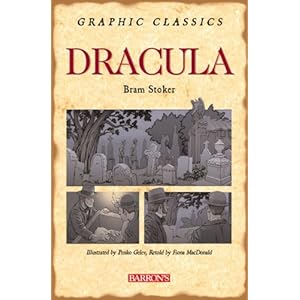
Dracula (Graphic Classics (Barron's Paperback))
Dracula appears in a graphic novel format.  
If you hold this book in front of a mirror,
 illustrated vampires will appear...backwards!

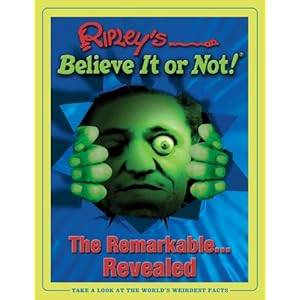
Ripley's Believe It Or Not! Remarkable Revealed
Believe it!


The Crow (A Not-So-Scary Story)
There was also a sweet Poe riff,

Tupelo Rides the Rails   [TUPELO RIDES THE RAILS] [Hardcover]
and a dog who loves to travel,


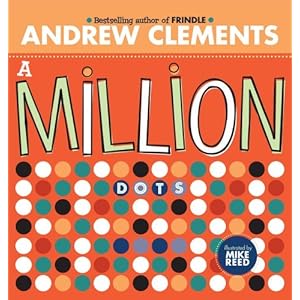
A Million Dots
and a way to visualize what a million looks like,


Lincoln Tells a Joke: How Laughter Saved the President (and the Country)
and a man in a funny hat.

I like to keep a mess of illustrated "children's" books in my classroom.   A voracious reader myself, I like a break from the black and white of most books written for people my age.   Art tickles a part of my brain that nothing else can reach.   And you will quickly find that some books that look like they are for kindergartners are not meant for them at all.  

Shortish, illustrated books are a relaxing way to build prior knowledge or cultural literacy.   They can also take a complex topic, break off a tiny bite-size piece and present it in an engaging, meaningful way.  

No one's afraid of books that look like they were plucked from a child's toy box...no one.  

Tuesday, July 26, 2011

Teens Love Lucy Too

I introduced I Love Lucy to my students for two main reasons.   The words "cultural literacy" buzzed in our county after one particular staff development.   We also needed to contrast our study of dramatic irony in "The Diary of Anne Frank."  

Cultural literacy is the idea that people communicating within a particular society will have a richer experience if they are "in the know" when it comes to allusions that are frequently made during conversations or in print.   For example, within a week of students starting Lord of the Flies, a book that was just days ago out of their consciousness, they usually catch a reference to the classic on television.   Studying Anne Frank has a similar effect.   Now when I introduce Anne to students, many have never heard of her before and are a little steamed when I "ruin the story" for them by revealing that she does not survive the Holocaust.   In no time, they will see a news story that mentions her or a televised show that does the same.   In short, cultural literacy is what we think that everybody knows within a society...like Anne Frank or I Love Lucy.

Dramatic irony occurs when one or more characters do not know something that the audience and other characters do know.   Sometimes only the audience knows the piece of information.   Whether we are reading from the play or the Diary, when Anne makes plans for her future, we get a sinking feeling in our hearts.   She looks forward to letting her children read books by her favorite author; we know that there will be no children for Anne.   Dramatic irony is also what makes us edgy when we watch horror films.   We know what's behind that door.   Don't open it!   We know when our hero is running towards danger, making the tension unbearable.  

Let's talk comic relief though.   Shakespeare knew that we needed it, and he was right.   I'm a fan of classic sitcoms as a regular viewer and as a teacher.   In 22 minutes, you can usually get a light plot line from start to finish.   Depending on the episode, you can focus on just about any literary element you choose.   Most literature books are not known for their rip-roaring humor, so you might simply need a break from a dark mood.   (Give me a second while I come up with a companion piece for "The Tell-Tale Heart.")

The entire series of I Love Lucy is built on dramatic irony.   Think of how many shows are constructed around the premise of Lucy keeping a secret from Ricky.   When "Lucy is Enceinte" begins, we see that Lucy is late in a pregnancy, but we are supposed to go along with her mysterious complaints of feeling "blah" until she gets word from her doctor that she is pregnant.   She wants to tell Ricky the good news privately, just the way she dreamed she would.   Comedy ensues.   Of course, Ricky does not find out that they are expecting until the last three minutes of the show.    All of the laughs stem from Ethel, Fred and the audience knowing something that Ricky does not know.


This is one of the best-loved sitcom episodes of all time.   Sure the Ricardos were characters, but Lucy and Desi were real as was this pregnancy.   You can see the lines of truth and fiction blur when Ricky sings to Lucy in the last scene, and teens respond to that.   After all, it's true love....even without the vampires.   On a side note, the word "pregnant" does not appear in the script.   This episode is a great opportunity to talk about word choice for writers and how purpose, audience and societal expectations can influence craft.

And, yes, my I Love Lucy DVD collection from season two was in my classroom when the storm hit.   Thanks to a generous friend of a friend, Jacqueline Rose, I now have replacements!